What is Google Voice?
Google Voice is a free telecommunications service from Google that gives you a phone number for calling, texting, and voicemail. Launched in 2009, it has become one of the most popular free phone number services in the United States. You can use it from a web browser, an Android phone, or an iPhone, and it works over the internet rather than a traditional cellular connection.
The appeal is obvious: you get a real-looking US phone number at absolutely no cost. Google Voice numbers carry standard US area codes, they can send and receive texts, and they integrate seamlessly with the Google ecosystem. For casual communication — giving out a secondary number, screening calls, or keeping a separate line for business — Google Voice is hard to beat.
However, there is a critical technical detail that most users overlook. Google Voice numbers are VoIP (Voice over Internet Protocol) numbers, not mobile numbers. While they look identical to a regular phone number on the surface, behind the scenes they are routed through Google's internet infrastructure rather than through a mobile carrier's cellular network. This distinction does not matter for everyday communication, but it matters enormously for SMS verification — and that is where the problems begin.
How Google Voice Works
When you sign up for Google Voice, Google assigns you a number from its pool of VoIP numbers. Incoming calls and texts are routed over the internet to your Google Voice app or web interface. Because these numbers are internet-based, they show up in carrier lookup databases as VoIP or landline numbers rather than mobile numbers. This is the fundamental technical reality that creates verification problems, and no amount of workarounds can change it. The number type is embedded in the carrier database, and any service that checks it will see "VoIP" rather than "mobile."
🔒 Need a virtual number right now?
Instant SMS verification • 150+ countries • from $0.20
📱 Download VerifySMS FreeUsing Google Voice for SMS Verification: The Reality
Millions of people have tried using their Google Voice number to verify accounts on various platforms. The experience is inconsistent at best and frustrating at worst. Some services accept the number without issue. Others reject it immediately. And a growing number fall somewhere in between — they accept the number but silently never deliver the verification code.
Here is what typically happens when you try to use Google Voice for verification:
- Immediate rejection: The platform tells you outright that the number cannot be used. You see messages like "This phone number is not valid," "VoIP numbers are not allowed," or "Please use a mobile number."
- Silent failure: The platform appears to accept your number and says it sent a code, but the code never arrives. This is arguably worse because you waste time waiting and retrying, unsure if the issue is on your end or theirs.
- Initial success, later failure: You successfully verify once, but when the service re-verifies you (for a password reset, new device login, or security check), the Google Voice number is now blocked due to updated VoIP detection.
- Account suspension: Some platforms retroactively flag accounts that were verified with VoIP numbers, leading to temporary or permanent suspensions.
The situation is getting worse, not better. Services are continuously upgrading their fraud detection systems. A Google Voice number that worked for verification six months ago may be blocked today. Major platforms like Meta, Apple, and financial institutions update their number-type databases regularly. If you are relying on Google Voice for important account verifications, you are building on an increasingly unstable foundation.
The root cause is straightforward: services use carrier lookup APIs (also called HLR lookups or number intelligence APIs) to determine the type of an incoming phone number. These APIs query telecom databases and return metadata including whether the number is mobile, landline, or VoIP. Google Voice numbers are consistently classified as VoIP, and that classification triggers blocking rules on platforms that want to ensure each account is tied to a real person with a real mobile phone.
Why Do Services Block Google Voice and VoIP Numbers?
To understand why so many platforms reject VoIP numbers, you need to understand the economics of online fraud. VoIP numbers are cheap (often free) and can be obtained in unlimited quantities. This makes them the tool of choice for spammers, scammers, and bad actors who need to create hundreds or thousands of fake accounts. By blocking VoIP numbers, services can eliminate a massive category of abuse with a single technical check.
🔒 Need a virtual number right now?
Instant SMS verification • 150+ countries • from $0.20
📱 Download VerifySMS FreeThe Three Main Reasons
1. Fraud prevention. A real mobile number is tied to a physical SIM card, which in most countries requires some form of identity verification to purchase. VoIP numbers have no such requirement. By restricting verification to mobile numbers, platforms ensure that creating fake accounts is at least somewhat costly and traceable. A single fraudster can generate thousands of Google Voice numbers, but acquiring thousands of real SIM cards is orders of magnitude harder.
2. Regulatory compliance. Financial services, healthcare platforms, and other regulated industries often have Know Your Customer (KYC) and Anti-Money Laundering (AML) requirements. These regulations may explicitly require that phone verification uses a mobile number associated with a real carrier account. Using VoIP numbers in these contexts is not just unreliable — it may be non-compliant.
3. User quality signals. Platforms like dating apps, social networks, and marketplaces use the type of phone number as a quality signal. A user who verifies with a real mobile number is statistically more likely to be a genuine user than one who uses a VoIP number. This is not a perfect heuristic, but it is effective enough that virtually every major platform has adopted it.
How VoIP Detection Works
When you enter a phone number on a website or app, the platform sends that number to a carrier lookup API before dispatching the SMS. Within milliseconds, the API returns data about the number including the carrier name, the line type (mobile, landline, VoIP), and sometimes additional metadata. If the line type comes back as VoIP, the platform can either reject the number outright or route it to a different, more restrictive verification flow.
Popular carrier lookup providers include Twilio Lookup, Nexmo Number Insight, Plivo, and specialized services like Ekata and IPQualityScore. All of them will correctly identify a Google Voice number as VoIP. There is no technical way to mask or change this classification — it is determined by the underlying carrier data, not by anything the end user controls.
🔒 Need a virtual number right now?
Instant SMS verification • 150+ countries • from $0.20
📱 Download VerifySMS FreeWhich Services Block Google Voice Numbers?
The list of services that block or restrict Google Voice numbers grows every year. Here is a comprehensive breakdown of major platforms and their stance on VoIP numbers as of early 2026:
Banking and Financial Services
Financial services are the most aggressive at blocking VoIP numbers. KYC regulations and the high stakes of financial fraud mean that banks and fintech companies invest heavily in number verification. If you try to use Google Voice with your bank, expect it to fail.
Social Media and Communication
Messaging apps that use your phone number as your identity (WhatsApp, Telegram, Signal) almost universally block VoIP numbers. Social media platforms have varying policies — some block VoIP outright, while others may accept it initially but flag the account for additional scrutiny. The yellow indicators above mean the service sometimes accepts Google Voice numbers but behavior is unreliable and inconsistent.
Dating Apps
Dating apps are among the strictest about VoIP blocking because fake profiles and catfishing are major problems in the industry. These platforms require real mobile numbers as a baseline safety measure to protect their users.
E-commerce and Delivery
Tech and Cloud Services
✗ Red = Google Voice is blocked or fails consistently. ● Yellow = Inconsistent results; may work sometimes but is unreliable. These classifications are based on widespread user reports and may change as platforms update their detection systems.
What is VerifySMS?
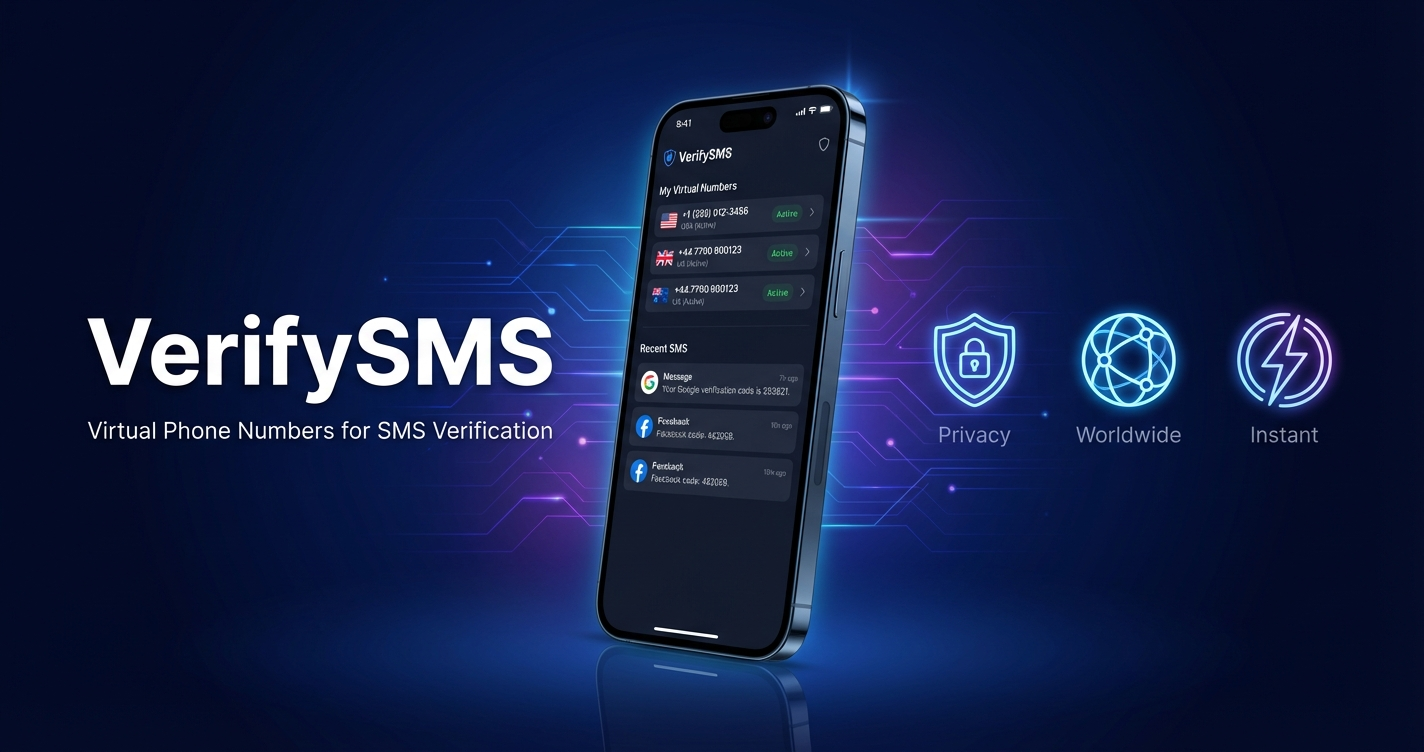
VerifySMS is an iOS app that provides temporary real mobile phone numbers specifically for SMS verification. Unlike Google Voice, which gives you a permanent VoIP number, VerifySMS leases you access to real, non-VoIP mobile numbers from actual carrier networks. Each number is a genuine mobile number attached to a physical SIM card, which means it passes every carrier lookup check and works with every service that requires phone verification.
The concept is simple: you open the app, select the country and service you need to verify with, receive a temporary mobile number, enter it on the platform that requires verification, and then read the incoming SMS code directly in the VerifySMS app. The entire process takes less than a minute, and the number works on the first attempt because it is indistinguishable from any other mobile number in the carrier database.
VerifySMS is designed for a different use case than Google Voice. It is not a permanent phone line — it is a verification tool. You use it when you need to confirm your identity on a platform, and the temporary number is retired after use. This model is what allows VerifySMS to maintain a continuously fresh pool of clean, unblocked mobile numbers.
The VerifySMS Non-VoIP Advantage
The single most important difference between VerifySMS and Google Voice is the number type. This is not a minor technical distinction — it is the entire reason one service works for verification and the other frequently does not.
Real Mobile Numbers vs. VoIP Numbers
When a platform queries a carrier lookup API about a VerifySMS number, the response comes back as "mobile" — because it genuinely is a mobile number. The number is registered with a real cellular carrier, has a valid IMSI (International Mobile Subscriber Identity), and is routed through the carrier's standard SMS gateway. There is nothing to detect because there is nothing fake about the number's classification.
Google Voice numbers, on the other hand, return "VoIP" or "landline" in carrier lookups. No matter how the call or text is routed to your device, the underlying number type is VoIP, and that is what verification systems check. You cannot change it, you cannot mask it, and no app or VPN will make a Google Voice number appear to be a mobile number in carrier databases.
Fresh, Clean Number Pool
VerifySMS maintains and rotates a large pool of mobile numbers. Numbers that have been used for a specific service are marked and not reissued for the same service. This means you are not getting a number that has already been flagged or overused on the platform you are trying to verify with. The number pool is continuously refreshed, ensuring high delivery rates and first-attempt success.
Multi-Country Coverage
While Google Voice is limited to US numbers only, VerifySMS offers numbers from multiple countries. This matters for services that require a local phone number or for users who need to verify international accounts. Whether you need a US, UK, Canadian, or other country number, VerifySMS provides genuine mobile numbers from that country's carrier networks.
Speed and Reliability
Because VerifySMS numbers are real carrier numbers, SMS delivery follows the standard carrier-to-carrier routing path. Verification codes typically arrive within 5 to 15 seconds, comparable to receiving a text on your personal phone. Google Voice SMS delivery can be delayed because the message must be routed through Google's VoIP infrastructure, and some short codes do not deliver to VoIP numbers at all, resulting in codes that simply never arrive.
VerifySMS numbers pass the same carrier checks that your personal mobile phone passes, because they are the same type of number. There is no VoIP detection to worry about, no guessing whether a service will accept the number, and no silent failures where codes disappear into the void.
Pricing Comparison: Free vs. Pay-Per-Use
The most obvious difference between the two services is price. Google Voice is free. VerifySMS is a paid service. However, the pricing conversation deserves more nuance than "free vs. not free."
Google Voice Pricing
Cost: $0. Google Voice is completely free for personal use in the United States. You get a phone number, unlimited texting and calling to US numbers, voicemail, and call forwarding. There are paid Google Voice plans for Google Workspace business users starting at $10/month, but the personal version is free.
The catch, of course, is that the free number is VoIP and cannot be used for many verifications. If you spend an hour trying to verify an account with Google Voice, failing, troubleshooting, and eventually giving up — the cost of that wasted time may exceed what you would have paid for a working solution upfront.
VerifySMS Pricing
VerifySMS uses a credit-based system through in-app purchases. You buy credits and spend them on individual verifications. Pricing varies by country and service, but typical US number verifications cost between $1 and $3 per verification. The exact cost depends on the specific service you are verifying with and the country of the number.
The pay-per-use model means you only spend money when you actually need a verification. There are no subscriptions, no monthly fees, and no minimums. If you need one verification this month and none the next, you pay for one verification total. Credits do not expire, so you can buy a pack and use them whenever needed.
The Real Cost Calculation
Think of it this way: if Google Voice works for your specific verification need, it costs $0 and is the obvious choice. But if it does not work — and for the majority of important services, it does not — then $0 gets you nothing. A VerifySMS credit that costs $1-3 and works on the first attempt is infinitely better value than a free service that fails. The relevant comparison is not "$0 vs. $2" but rather "works vs. doesn't work."
| Pricing Aspect | Google Voice | VerifySMS |
|---|---|---|
| Base cost | Free | Pay-per-use (credits) |
| Cost per verification | $0 (when it works) | ~$1–$3 |
| Monthly subscription | None (personal) / $10+ (Workspace) | None |
| Hidden costs | Time wasted on failed verifications | None |
| Refund for failure | N/A (free) | Credits returned if code not received |
Feature-by-Feature Comparison Table
Here is a detailed side-by-side comparison of every important feature and capability:
| Feature | Google Voice | VerifySMS |
|---|---|---|
| Number type | VoIP | Real mobile (non-VoIP) |
| Passes carrier lookup | No — identified as VoIP | Yes — identified as mobile |
| Works with banks | Rarely / No | Yes |
| Works with WhatsApp | No | Yes |
| Works with dating apps | No | Yes |
| Available countries | US only | Multiple countries |
| Number permanence | Permanent (your number) | Temporary (per verification) |
| Voice calls | Yes | No (SMS only) |
| Two-way texting | Yes | No (receive only) |
| Voicemail | Yes | No |
| Price | Free | ~$1–$3 per verification |
| Platform | iOS, Android, Web | iOS |
| Requires Google account | Yes | No (Apple Sign In) |
| SMS delivery speed | Variable (5–60+ seconds) | Fast (5–15 seconds typically) |
| Short code support | Limited | Full support |
| Privacy from service | Moderate (number traces to you) | High (temporary number, no link to you) |
When to Use Each Service
Use Google Voice When...
- You need a free, permanent secondary phone number for calls and texts with friends, family, or colleagues.
- You want to give out a number on classified ads, online forms, or anywhere you do not want to share your real number.
- You need voicemail transcription and call screening features.
- You are verifying with a service that you know accepts VoIP numbers (test it first before committing to a workflow).
- You are in the US and need a basic phone line at zero cost for everyday communication, not verification.
Use VerifySMS When...
- You need to verify an account on a service that blocks VoIP numbers (banks, WhatsApp, Tinder, etc.).
- You want guaranteed first-attempt verification success without troubleshooting or guesswork.
- You need a phone number from a country other than the US for international platform verification.
- You value privacy and do not want a verification number permanently linked to your identity.
- You have already tried Google Voice and it did not work for your specific service.
- You are setting up an account on a platform with strict VoIP detection and cannot afford to have the verification fail.
Google Voice is a free phone line. VerifySMS is a verification tool. Comparing them is like comparing a free email address to a document signing service — they overlap superficially but serve fundamentally different purposes. The best approach is to use Google Voice for communication and VerifySMS when you need reliable, guaranteed verification.
Pros and Cons
Google Voice
- Completely free for personal use
- Permanent phone number you keep
- Full phone features: calls, texts, voicemail
- Integrates with Google Workspace
- Available on iOS, Android, and web
- Voicemail transcription included
- VoIP number — blocked by many services
- US numbers only
- Unreliable for SMS verification
- Short codes often do not deliver
- Number linked to your Google account
- Requires existing US number to set up
VerifySMS
- Real mobile (non-VoIP) numbers
- Works with all services, including strict ones
- Multiple countries available
- Fast SMS delivery (5–15 seconds)
- High privacy (temporary numbers)
- No subscription required
- Not free — costs $1–$3 per verification
- Temporary numbers (not a phone line)
- SMS receive only — no calls or outbound texts
- iOS only (no Android or web app yet)
- Not suitable for ongoing 2FA (number is temporary)
Final Verdict: Which Should You Choose?
The answer depends entirely on what you are trying to do.
If you need a free secondary phone number for everyday communication — calls, texts, voicemail — Google Voice is excellent. It is free, reliable for person-to-person communication, and offers a genuine permanent phone number. For these use cases, there is no reason to pay for VerifySMS.
If you need to verify an account on a platform that requires SMS verification, especially one that blocks VoIP numbers — VerifySMS is the clear winner. Its real mobile numbers pass every carrier check, work with every service, and deliver codes quickly. The small per-verification cost is justified by the guaranteed success and time saved.
The common mistake people make is assuming that because Google Voice gives you "a phone number," it will work for everything a phone number can do. It will not. VoIP numbers and mobile numbers are fundamentally different in how they are classified in telecom databases, and increasingly, the services you interact with care about that difference.
Our Recommendation
Use Google Voice as your free secondary phone line. Use VerifySMS when you need SMS verification that actually works. They complement each other rather than compete. For the specific task of passing SMS verification on platforms with VoIP detection, VerifySMS is the right tool for the job.
The SMS verification landscape is moving firmly in the direction of stricter VoIP detection. What worked with Google Voice a year ago may not work today, and what works today may not work next month. If SMS verification is something you need to do regularly and reliably, investing in a service that provides real mobile numbers is a pragmatic decision that saves time, frustration, and the risk of being locked out of important accounts.
At the end of the day, free is only a good deal if it actually works. For SMS verification in 2026, "free" from Google Voice increasingly means "free but broken." VerifySMS costs a small amount per verification but delivers what actually matters: a working verification code, every time, on the first attempt.
Ready for Verification That Works?
Download VerifySMS and get real mobile numbers that pass every carrier check. No VoIP blocks. No failed codes. No guesswork.
Download VerifySMS on the App StoreFrequently Asked Questions
Can I use Google Voice to verify WhatsApp?
No. WhatsApp has blocked Google Voice and other VoIP numbers for years. WhatsApp requires a real mobile number for registration because it uses your phone number as your identity within the messaging network. VerifySMS provides real mobile numbers that work with WhatsApp verification.
Is Google Voice safe to use for banking?
Most US banks will not accept Google Voice numbers for two-factor authentication. Even if you manage to set it up initially, you risk being locked out of your account if the bank updates its VoIP detection. For banking, always use a real mobile number — either your personal carrier number or a non-VoIP number from VerifySMS.
Why did Google Voice work for a service before but now it doesn't?
Services regularly update their carrier lookup databases and fraud detection rules. A platform that previously accepted VoIP numbers may have since implemented stricter verification. This is a one-way trend — services are becoming more restrictive over time, not less.
Can I use VerifySMS for two-factor authentication (2FA)?
VerifySMS is designed for one-time verification, not ongoing 2FA. Because the numbers are temporary, you would not be able to receive future 2FA codes on the same number. For 2FA, we recommend using your personal mobile number or an authenticator app like Google Authenticator or Authy.
Is it legal to use a temporary number for verification?
Using a temporary number for SMS verification is legal in most jurisdictions. You are not misrepresenting your identity — you are simply using a different phone number, which is no different from using a prepaid SIM. However, using any service to create fraudulent accounts or violate a platform's terms of service is your responsibility. VerifySMS is a tool; how you use it must comply with applicable laws and platform policies.
Does Google Voice work outside the United States?
Google Voice is primarily a US service. You need a US Google account and a US phone number to set it up. While you can use Google Voice internationally once it is set up (for example, to receive texts while traveling), the number itself is always a US number. VerifySMS, by contrast, offers numbers from multiple countries, making it suitable for international verification needs.
What if VerifySMS cannot receive the code?
In the rare case that a verification code is not received, VerifySMS returns the credits to your account. You are not charged for failed verifications. This is a significant advantage over services that charge regardless of outcome.
Can I port my Google Voice number to a real carrier?
Yes, Google allows you to port your Google Voice number to a real mobile carrier for a one-time fee of $3. Once ported, the number becomes a real mobile number and will no longer be classified as VoIP. However, this requires an active carrier plan, which defeats the purpose of having a free number. It also takes several days to complete the port.
Ready to protect your privacy?
Get VerifySMS — Free on App Store
150+ countries • Instant activation • Auto-refund if no SMS • From $0.20
Download Free App★★★★★ 4.8 • iOS 16+ • Free