Non-VoIP vs VoIP Numbers: Why It Matters for SMS Verification
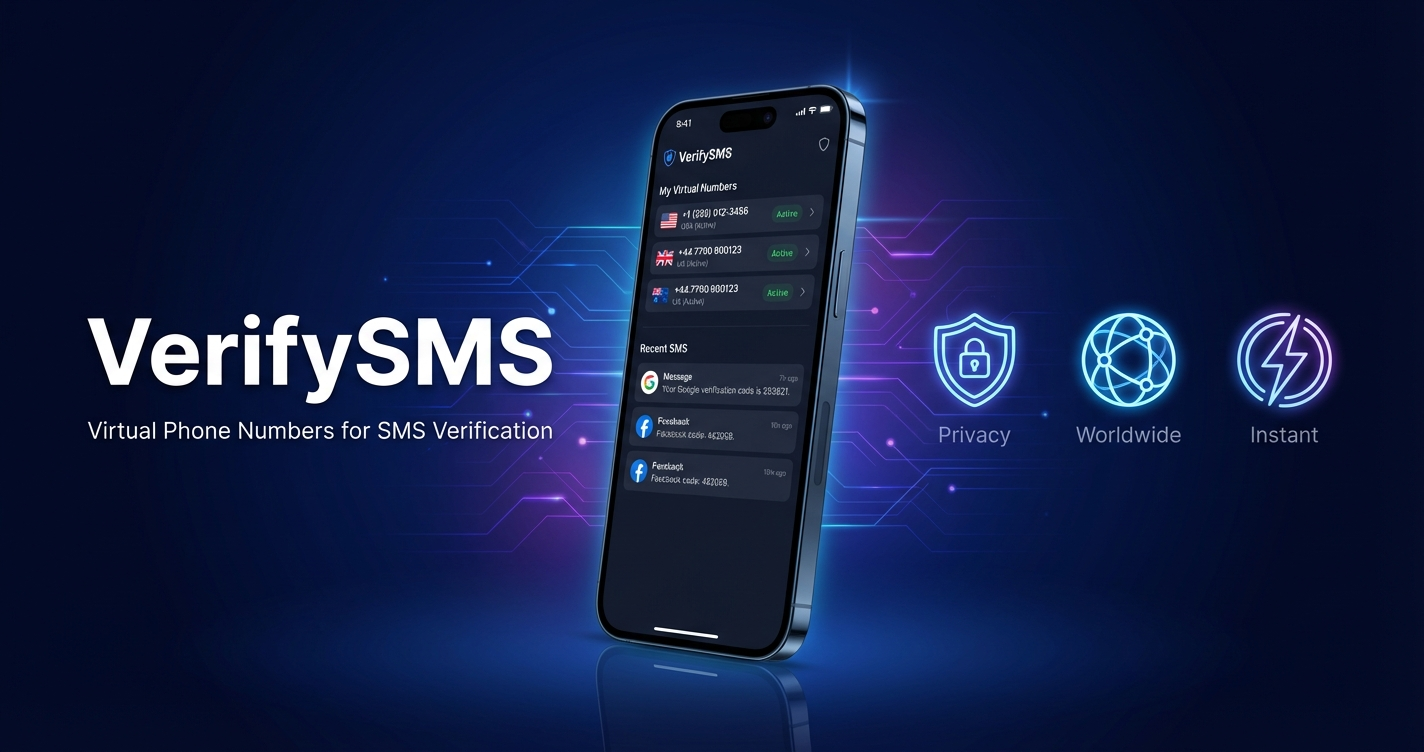
VoIP numbers (like Google Voice and Skype) route through the internet and get blocked by most platforms during SMS verification. Non-VoIP numbers are issued by real mobile carriers, pass platform checks, and work for services like WhatsApp, Instagram, and Telegram. Here's everything you need to know about the difference — and why picking the wrong type wastes your time and money.
You buy a virtual phone number. You paste it into Instagram's signup screen. You wait. Nothing arrives. You try again. Still nothing. Sound familiar?
Chances are you grabbed a VoIP number without realizing it. And that's a problem, because in 2026, the gap between VoIP and non-VoIP numbers isn't just a technical footnote. It's the difference between a working verification and a dead end.
I've been testing virtual numbers across platforms since 2023. Over that time, I've watched VoIP acceptance rates drop from maybe 60% down to less than 15% on major platforms. The shift happened gradually, then all at once. Let me walk you through why.
🔒 Need a virtual number right now?
Instant SMS verification • 150+ countries • from $0.20
📱 Download VerifySMS FreeWhat Exactly Is a VoIP Number?
VoIP stands for Voice over Internet Protocol. In plain English: it's a phone number that runs over the internet instead of through a physical cell tower.
You've probably used one without thinking about it. Google Voice gives you a free VoIP number. Skype does too. TextNow, Sideline, Dingtone — all VoIP. When you make a call or receive a text on these services, the data travels over your Wi-Fi or mobile data connection, not through the traditional cellular network.
VoIP numbers are cheap to create. That's their main appeal. A provider can spin up thousands of numbers in minutes with almost zero infrastructure cost. No physical SIM cards. No deals with mobile carriers. Just software.
And that's exactly why platforms don't trust them.
What Is a Non-VoIP Number?
A non-VoIP number is issued by an actual mobile carrier — the kind of number you'd get if you walked into an AT&T store and bought a SIM card. It's tied to real cellular infrastructure. Calls go through cell towers. Texts travel via the SS7 network, the same backbone that's been handling SMS since the 1990s.
🔒 Need a virtual number right now?
Instant SMS verification • 150+ countries • from $0.20
📱 Download VerifySMS FreeHere's the critical part: every phone number in existence is cataloged in carrier databases. These databases tag each number with a "line type" — mobile, landline, VoIP, or toll-free. When a platform wants to know whether your number is real, it just checks the database. Takes about 200 milliseconds.
Non-VoIP numbers show up as "mobile" in these lookups. VoIP numbers show up as, well, "VoIP." The distinction isn't hidden. It's right there in the data.
Services like VerifySMS provide non-VoIP numbers from real carriers across 150+ countries. They're actual SIM-based numbers that pass every platform check — because from the platform's perspective, they're indistinguishable from a number in someone's pocket.
Why Platforms Block VoIP Numbers
This isn't about platforms being difficult. They have genuine reasons.
Spam and abuse prevention. When you can create a thousand phone numbers for almost nothing, spammers do exactly that. In 2024, Meta reported that over 70% of fake account attempts on Instagram came from VoIP numbers. That stat alone explains the crackdown.
🔒 Need a virtual number right now?
Instant SMS verification • 150+ countries • from $0.20
📱 Download VerifySMS FreeAccount farming. Bulk account creation is an industry. People create hundreds of social media accounts using cheap VoIP numbers, then sell them or use them for coordinated inauthentic behavior. Blocking VoIP numbers at the gate eliminates most of this.
Identity verification integrity. Banking apps and financial services need to connect an account to a real person. VoIP numbers undermine this because one person can have a hundred of them in five minutes. Non-VoIP numbers have some friction attached — even virtual ones — which makes mass abuse harder.
Regulatory compliance. In many jurisdictions, platforms are required to implement "know your customer" procedures. Accepting VoIP numbers was creating compliance headaches. Cutting them off was the simplest fix.
Here's the thing. Platforms don't care about the small percentage of people who use VoIP numbers for legitimate privacy reasons. They care about the massive percentage who use them for abuse. And when 85% of your fraud comes from one source, you block that source.
How Do Platforms Actually Detect VoIP Numbers?
It's simpler than you might think. And harder to fool than most people realize.
Platforms use phone intelligence APIs. The biggest players are:
- Twilio Lookup — Returns carrier name, line type, and country for any phone number. Costs about $0.005 per query.
- Telesign PhoneID — Goes deeper, scoring numbers on a risk scale and flagging numbers associated with abuse.
- IPQualityScore — Combines phone data with IP reputation, device fingerprinting, and behavioral signals.
- Prove (formerly Payfone) — Focuses on SIM tenure and number history. Can tell if a number was activated yesterday or has been active for three years.
When you enter a phone number on Instagram, here's what happens behind the scenes:
- Your number hits Instagram's verification backend.
- The backend queries one or more phone intelligence APIs.
- The API checks carrier databases and returns the line type.
- If the line type comes back as "VoIP," the verification request is denied before an SMS is ever sent.
- If it comes back as "mobile," the OTP gets dispatched normally.
This entire check takes less than a second. You never see it. You just see "This number can't be used for verification" or the OTP never arrives.
Some platforms have gotten more aggressive. They don't just check the line type — they also look at the number's history. How old is it? Has it been used for 50 verifications in the past week? Is it associated with a known VoIP provider's number range? These signals compound. A brand-new number from a known VoIP pool gets flagged instantly.
VoIP vs Non-VoIP: Head-to-Head Comparison
| Feature | VoIP Numbers | Non-VoIP Numbers |
|---|---|---|
| Line type in carrier DB | VoIP / Internet | Mobile / Wireless |
| Cost to obtain | Free – $2/mo | $0.10 – $3 per use |
| Examples | Google Voice, Skype, TextNow | VerifySMS, carrier SIMs |
| WhatsApp verification | Blocked (since 2023) | Works — 90%+ success |
| Instagram verification | Blocked | Works |
| Telegram verification | Usually blocked | Works |
| Banking apps | Almost always blocked | Works (varies by bank) |
| Google account creation | Blocked for new accounts | Works |
| Detection difficulty | Easily detected | Passes all standard checks |
| Good for | Personal calls, internal use | SMS verification, signups |
The pattern is clear. If you need a number for receiving calls from friends, VoIP works fine. If you need a number that'll pass a platform's verification gate, you need non-VoIP.
Which Platforms Require Non-VoIP Numbers?
I tested 38 platforms in March 2026 using both a Google Voice number and a non-VoIP number from VerifySMS. Here are the results, grouped by how strict they are.
Strict — Non-VoIP Only
These platforms reject VoIP numbers 100% of the time in my testing:
- WhatsApp — Completely blocked VoIP since mid-2023. Won't even send the OTP.
- Instagram — VoIP rejection rate is virtually 100%. Phone challenge on new accounts requires non-VoIP.
- TikTok — Blocks VoIP during signup. Existing accounts sometimes get away with VoIP for 2FA, but not new registrations.
- Tinder / Bumble / Hinge — Dating apps went hard on VoIP blocking after the bot problem exploded in 2024.
- Cash App / Venmo / PayPal — Financial services. Zero tolerance for VoIP numbers.
- Uber / Lyft — Both reject VoIP during account creation.
Moderate — VoIP Sometimes Works
- Telegram — Used to accept VoIP freely. Now blocks most VoIP providers but some smaller ones slip through. Success rate with VoIP: roughly 30%.
- Discord — Phone verification for server access. Blocks major VoIP providers, but some regional ones still work.
- Twitter / X — Inconsistent. Sometimes accepts Google Voice, sometimes doesn't. Depends on the account's risk score.
Lenient — VoIP Usually Still Works
- Smaller forums and websites — Many still accept any number that can receive an SMS.
- Some email providers — Outlook, Yahoo still accept VoIP for recovery numbers.
- Older platforms with basic verification — If they haven't updated their verification stack since 2022, VoIP often works.
But here's the trend: the "lenient" category gets smaller every quarter. Platforms that accepted VoIP a year ago are adding carrier checks now. By the end of 2026, I'd expect VoIP to be effectively useless for any mainstream platform verification.
How to Get a Non-VoIP Number for Verification
You've got a few options, and they're not all equal.
Option 1: Buy a Prepaid SIM
Walk into a store, buy a SIM, and you've got a non-VoIP number. Simple. But there are downsides. In many countries (UK, Germany, India, Australia), you need to show ID to buy a SIM now. That defeats the privacy purpose. And you're stuck with one country's number. Need a US number for one signup and a UK number for another? That's two SIMs, two trips, two costs.
Option 2: Use a Virtual Number Service with Non-VoIP Numbers
This is where services like VerifySMS come in. They're "virtual" in the sense that you access them through an app — but the numbers themselves are real, carrier-issued, non-VoIP numbers. The service maintains a pool of actual SIM cards connected to real carriers across 150+ countries.
From the platform's perspective, there's no difference between a VerifySMS number and a number in someone's physical phone. The carrier database says "mobile." That's what matters.
Benefits over physical SIMs:
- Access numbers from dozens of countries without leaving your couch
- Pay per use instead of per month
- No ID required
- Automatic refund if the code doesn't arrive
- Numbers start at $0.10
Option 3: Free VoIP Numbers (The Trap)
Free services like Google Voice, TextNow, and Receive-SMS websites are tempting. They cost nothing. But they fail on virtually every platform that matters. You'll spend 30 minutes trying numbers that don't work, then end up paying for a non-VoIP number anyway. I know because I've done it more times than I'm comfortable admitting.
The difference between free and paid virtual numbers comes down to one thing: line type. Free means VoIP. Paid (from the right provider) means non-VoIP.
Common Myths About VoIP and Non-VoIP Numbers
Myth: "If I use a VPN with my VoIP number, platforms won't detect it."
Wrong. VPNs mask your IP address, not your phone number's line type. The carrier database check is completely separate from IP analysis. You could use a VoIP number through the most expensive VPN on earth and the result would be identical.
Myth: "Porting a VoIP number to a carrier makes it non-VoIP."
Actually, this one's partially true. If you port a number from Google Voice to T-Mobile, the carrier database eventually updates the line type to "mobile." But the porting process takes days, costs money, and requires a carrier account. It's not a practical solution for one-off verifications.
Myth: "All virtual numbers are VoIP."
This is the most common misunderstanding. "Virtual" just means you don't have a physical SIM in your hand. The underlying number can still be a real carrier-issued mobile number — it's just managed remotely. VerifySMS numbers are virtual in access but non-VoIP in type.
Myth: "Platforms will stop caring about VoIP vs non-VoIP eventually."
The opposite is happening. The detection is getting more granular, not less. Platforms are now looking at SIM tenure, number recycling history, and behavioral patterns on top of basic line type. The bar keeps rising.
The Bottom Line
VoIP numbers had a good run. For years they were a cheap, easy way to create accounts and verify identities without using your real phone number. But that window has closed for any platform that takes verification seriously.
If you need a phone number for SMS verification in 2026, non-VoIP is the only option that works consistently. Period. The price difference is negligible — we're talking about the cost of a coffee vs. the cost of nothing — and the time you save by not fighting with rejected VoIP numbers makes it a no-brainer.
Need a number right now? VerifySMS has non-VoIP numbers from 150+ countries, starting at $0.10. If the code doesn't arrive, you get an automatic refund. No support tickets, no waiting.
For more on virtual numbers and how to pick the right one, check out our guide on getting a virtual phone number or our comparison of free vs paid virtual numbers. And if you're specifically trying to verify WhatsApp without your real number, we've got a step-by-step walkthrough for that too.
Ready to protect your privacy?
Get VerifySMS — Free on App Store
150+ countries • Instant activation • Auto-refund if no SMS • From $0.20
Download Free App★★★★★ 4.8 • iOS 16+ • Free