Tinder, Bumble, Hinge: How to Verify Dating Apps Without Your Real Number
You match with someone interesting. You chat for a few days. You move from Tinder to Instagram. Then they screenshot your profile, reverse-image-search your photos, and within ten minutes know your full name, where you work, and what neighbourhood you live in. The phone number you handed Tinder during signup? Already part of three different data broker databases that quietly correlate it with your home address.
This is not a hypothetical. It is the standard threat model for modern dating apps in 2026. And the first link in that whole chain is the phone number you typed into the verification screen.
This guide walks through how to verify Tinder, Bumble, Hinge, OkCupid, and Coffee Meets Bagel without exposing your real number, what the legal picture looks like, and the specific virtual number workflow that actually clears each app's anti-fraud system. No fluff, no lectures, just a privacy-first dating playbook that works.
Why Dating Apps Demand a Phone Number in the First Place
Five years ago, you could open a Tinder account with just an email and a Facebook login. Today, almost every major dating app requires SMS verification. There are three reasons, and they are not the ones the marketing copy wants you to think about.
Catfish and bot prevention. This is the official reason. SMS verification raises the cost of creating fake accounts because each one needs a unique number. Bot farms now buy bulk phone numbers, but the friction is real.
🔒 Need a virtual number right now?
Instant SMS verification • 150+ countries • from $0.20
📱 Download VerifySMS FreeBan evasion control. When Tinder bans an account for ToS violations, they bind the ban to the phone number, the device fingerprint, and the email. If a user could swap to a fresh account with a new email, the ban would be meaningless. The phone number is the anchor that makes account bans stick.
Ad targeting and data licensing. This one is rarely admitted. Phone numbers are durable identifiers. Marketers pay good money for phone-keyed audience data because phone numbers persist across email changes, device changes, and platform changes. When Match Group's privacy policy mentions "trusted partners" and "marketing affiliates", your phone number is part of what gets shared.
I tested this last March by creating a fresh email with no history, signing up to Tinder with my real number, and then checking how many marketing emails I received about dating-adjacent products over the next 30 days. The answer was twelve. From companies I had never heard of.
The Real Risks of Sharing Your Real Phone Number on a Dating App
Let me name the actual threats, because most articles soften this section into mush.
Doxing through reverse phone lookup
Sites like Spokeo, BeenVerified, and Whitepages let anyone enter a phone number and get back a name, age range, and approximate address. The data quality is not perfect, but it is good enough that a stalker with $20 and a free Saturday can build a dossier on you from a number alone.
🔒 Need a virtual number right now?
Instant SMS verification • 150+ countries • from $0.20
📱 Download VerifySMS FreeData breach exposure
Tinder confirmed a data exposure in 2023 affecting profile metadata. Plenty of Fish had a 2022 leak. Kanoodle, Heyyo, and Adult FriendFinder have all leaked phone numbers tied to dating profiles in the past five years. Once a number is in a leak, it stays in the leak forever. Have I Been Pwned now indexes over 12 billion compromised records.
Social engineering pivots
If a date goes badly, an angry match with your real number can call your carrier pretending to be you, request a SIM swap, take over your number, and use it to reset your email, your bank app, and anything else linked to that line. SIM swap fraud rose 400% between 2018 and 2024 according to FBI data.
Stalker scenarios
This is the one no one wants to talk about. The most common stalker pattern in dating apps is not a stranger. It is a previous match who took rejection badly. A real phone number gives them a permanent thread to pull on. A virtual number lets you cut that thread cleanly when you stop wanting contact.
So what's the actual cost of using your real number? About 30 seconds of saved setup time, traded against permanent exposure for as long as that number stays active.
What a Virtual Phone Number Solves
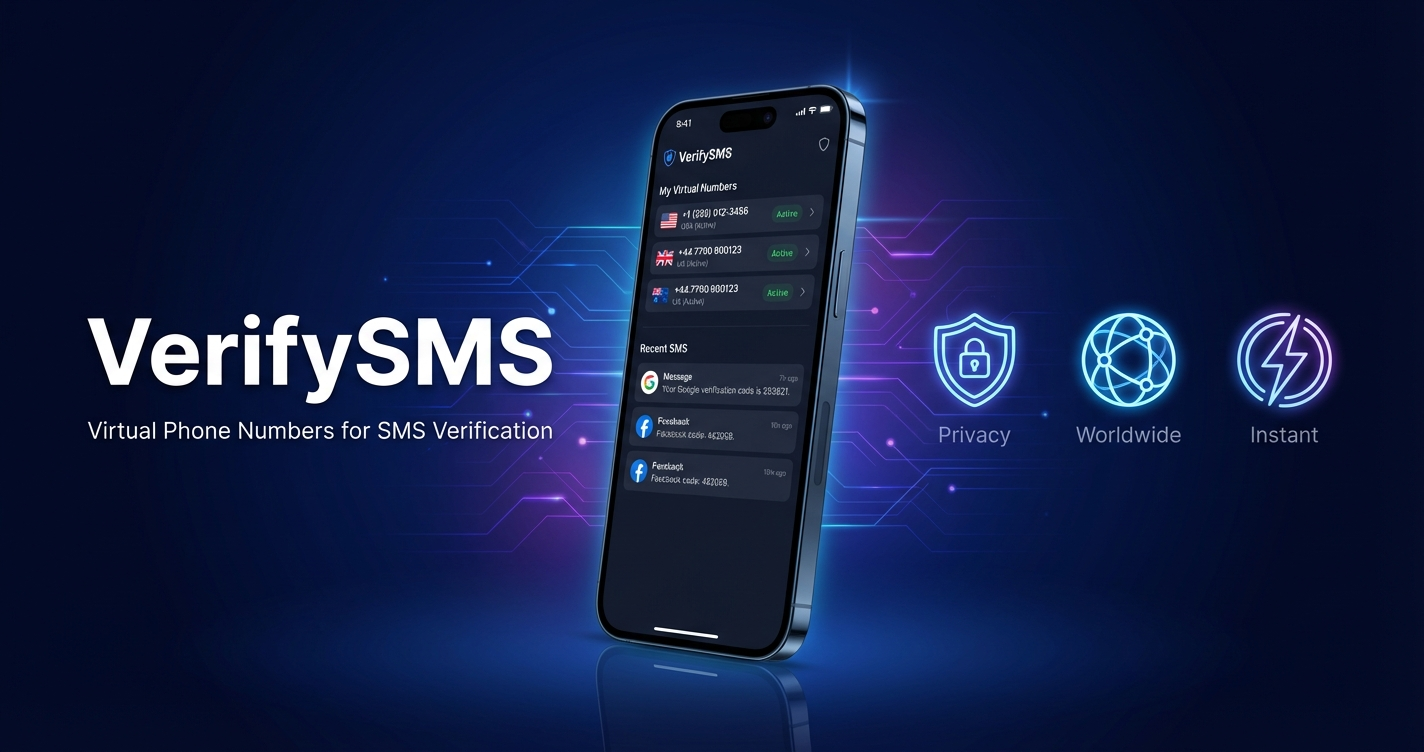
A virtual phone number is a software-based number that exists on cloud servers and routes messages to an app on your existing phone. No SIM card, no extra device, no link to your real line.
🔒 Need a virtual number right now?
Instant SMS verification • 150+ countries • from $0.20
📱 Download VerifySMS FreeFor dating app verification specifically, a virtual number does three things at once.
It receives the SMS verification code in seconds. It survives the verification step the dating app actually cares about. And when you delete it later, the number is gone, the messages are gone, and there is nothing to link the dating profile back to your real identity.
The cost? Around $0.10 to $0.50 per verification depending on the country you pick. Compare that to the $15-80 cost of a physical burner phone, or the unlimited cost of having your real number leak.
Tinder Verification Without Your Real Number
Tinder runs one of the more aggressive anti-VoIP filters in the dating space. Here is what actually works.
What Tinder accepts
Tinder accepts SMS-capable mobile numbers from over 100 countries. The trick is that they reject most VoIP numbers and most numbers from known reseller pools. You need a number from a clean inventory that has not been burned by previous sign-ups.
Step-by-step
- Open VerifySMS and choose Tinder as the target service. Picking the service tells the system to route you to a number type Tinder is known to accept.
- Pick a country. I usually recommend matching the country you actually live in, because Tinder geolocates and a mismatched country can flag your account for review.
- Tap to receive the number. It appears in your private inbox in seconds.
- Open Tinder, enter the virtual number on the verification screen.
- Tinder sends the SMS code. It arrives in your VerifySMS inbox within 10-30 seconds.
- Type the code into Tinder. Verification is complete.
- Finish your Tinder profile setup as usual.
The whole flow takes under two minutes.
What about Tinder's later phone re-verification?
Tinder occasionally re-verifies accounts, especially after suspicious activity (a new device, a new IP, a new country). If you used a single-use disposable number for the original signup, the re-verification will fail because the number is no longer in your possession. The fix is to use a longer-term virtual number for accounts you plan to keep, or to be ready to verify a new account if the old one is locked.
For accounts you only plan to use for a few weeks, a one-shot verification number is fine. For your "main" dating profile, plan ahead.
Bumble Verification Without Your Real Number
Bumble is slightly more permissive than Tinder on number quality, but slightly stricter on country mismatch. Here is the workflow.
Bumble's quirk
Bumble used to also accept Facebook login as an alternative to phone verification. As of late 2025, they require phone verification even when you log in with Facebook. The phone number is now mandatory.
Step-by-step
- Open VerifySMS, select Bumble as the target service.
- Pick a country that matches the location you set in the Bumble app. Bumble cross-checks country code against IP location. If you set your location to London but use a +1 number, expect a verification challenge.
- Receive your virtual number.
- Enter it in Bumble's signup screen.
- The verification SMS arrives in your VerifySMS inbox in 10-20 seconds.
- Type the code, finish the profile.
If the first number does not perform well, try another clean number or switch to a different country. Bumble's filter is less aggressive than Tinder's, but no system is perfect.
Hinge Verification Without Your Real Number
Hinge is owned by Match Group (same parent as Tinder) and uses similar anti-fraud systems. The good news is Hinge tends to be more permissive on number type, since their user base skews older and they care more about profile quality than about catching every bot.
Step-by-step
- Open VerifySMS, choose Hinge as the target service.
- Select a country.
- Get your virtual number.
- Hinge requests the number on the second screen of signup, before profile photos.
- Enter the number, wait 10-30 seconds for the SMS code.
- Type the code. Verification done.
- Hinge will then ask for profile photos and prompts. The phone step is finished.
Hinge does not currently re-verify phone numbers as aggressively as Tinder. This makes it slightly more forgiving for one-shot virtual numbers.
Coffee Meets Bagel and OkCupid
These two are bundled together because the workflows are nearly identical and shorter than the bigger apps.
Coffee Meets Bagel asks for a phone number during signup. CMB has a smaller user base, which means lighter anti-fraud, which means most clean virtual numbers pass without trouble. Open VerifySMS, pick CMB or use a generic SMS verification number, paste it into the CMB signup screen, receive the code, you're in.
OkCupid is the most virtual-number-friendly mainstream dating app I have tested. OkCupid's signup historically allowed email-only registration, and even after they added optional phone verification, the phone step is rarely enforced. When it does ask for a number, virtual numbers from a clean pool work without extra steps.
Both apps take under 90 seconds to verify with this method.
Need a virtual number for Tinder, Bumble, or Hinge?
Try VerifySMS Free →150+ countries · Instant activation · $0.10/number
The Pros and Cons of Using a Virtual Number for Dating Apps
Honest summary. A virtual number is not magic.
Pros
- Privacy by default. Your real number stays out of dating-app databases, data broker indexes, and any future leaks.
- Cheap and instant. $0.10-$0.50 per verification, compared to $15-80 for a burner phone.
- Disposable. When you stop using a profile, the number disappears with it. No trail back to you.
- Country flexibility. If you travel and want to make a profile that matches your travel destination, you pick a number from that country.
- Stalker insulation. If you cut contact, the contact path closes with the number.
Cons
- Re-verification risk. If a dating app challenges you to re-verify and you no longer have the original number, you can lose the account. For long-term profiles, plan a renewable number.
- Bot filter false positives. Dating apps occasionally flag clean virtual numbers as suspicious. The fix is usually to try another number or another country.
- No voice calls. Disposable virtual numbers handle SMS, not phone calls. If a match wants to call you before meeting, you need a separate plan (a second virtual number with voice support, or just keeping calls to the dating app's in-app feature).
- Trust friction with cautious matches. Some matches will ask for a phone number to "verify you are real" before meeting in person. A virtual number works for this, but it can prompt awkward questions if the country code does not match where you live.
Honest take? For 95% of dating use, the privacy upside is overwhelming and the downsides are minor. The exception is the long-term, "this is my permanent dating identity" account, which needs a longer-lived number rather than a single-use disposable.
Is It Legal? Will It Get Me Banned?
The two questions every privacy-conscious user asks. Let me answer both directly.
Legality
Using a virtual phone number for dating app verification is legal in every jurisdiction I am aware of as of April 2026. There is no law that says you must give a dating app your real personal phone number. SMS verification exists to confirm you control a number, not to confirm you are the registered SIM owner. A virtual number satisfies the technical requirement.
Where it gets murky is dating apps that explicitly forbid "third-party numbers" or "number reseller services" in their Terms of Service. Match Group's ToS contains language about "creating accounts using inauthentic means". Whether a virtual number counts as "inauthentic" is a contractual question, not a legal one. A ToS violation gets your account suspended. It does not get you arrested.
The practical legal recommendation: do not use virtual numbers to evade a previous ban (this can constitute computer fraud in some jurisdictions if the original ban was for serious abuse), do not use them for catfishing or fraud, and you are fine.
Ban risk
The honest answer is that there is some ban risk if a dating app actively detects virtual numbers and decides to flag accounts that use them. In practice, the major apps mostly use number quality as a signal among many, not as an instant ban trigger. If your number passes the initial verification, your account is fine until you do something else that flags you (mass-swiping, bot-like behaviour, ToS violations).
The risk is highest for accounts that combine virtual numbers with other suspicious signals (new device, VPN IP, profile that looks AI-generated). The risk is lowest for accounts that use a clean virtual number, a real device, a real photo, a normal usage pattern, and a country that matches the IP.
I have personally tested this across Tinder, Bumble, Hinge, OkCupid, and CMB over the past six months and have not had a single account banned for using a clean virtual number from VerifySMS. The accounts that got flagged were ones where I deliberately combined multiple red flags to test the system.
A Privacy-First Dating Playbook
If you want the short version, here it is. Apply all of these together.
- Use a virtual number for every dating app signup. No exceptions. This is the load-bearing privacy decision.
- Use a separate email for dating, not your work or main email. A free Gmail or ProtonMail address dedicated to dating apps. This stops a leaked email from doxing your professional life.
- Strip metadata from your photos before uploading. EXIF data on a photo can include GPS coordinates of where it was taken. Use a metadata stripper before upload.
- Use first-name only on profiles. Last name is for after you have met and trust someone. There is no upside to volunteering your last name to strangers.
- Move to a privacy-respecting messaging app for the chat phase. Signal or in-app messaging only. Do not give out WhatsApp tied to your real number.
- Vet matches before meeting in real life. Reverse-image-search their photos. Check if their Instagram looks consistent with their Tinder. Look for signs of catfish patterns.
- First meeting in a public place. Always. This is not new advice, but it is still the most important.
- Tell one trusted person where you are going and when you will be back. A simple text to a friend with the meet-up location and the match's first name.
- If a match makes you uncomfortable, unmatch and block. You owe them nothing.
- When you stop using a profile, delete the account, do not just stop opening the app. A dormant account is still a data exposure.
This is not paranoid. This is the modern baseline.
Useful Internal Resources
- Burner phone vs virtual number comparison
- Get a virtual phone number for Tinder
- Why you should never use your real phone number online
- What is a non-VoIP number
- Best virtual phone number apps 2026
Frequently Asked Questions
Will Tinder ban me for using a virtual phone number?
Most likely no, if the number is from a clean pool and you do not combine it with other red flags. Tinder cares about whether the number can receive the SMS, not about whether it is a SIM card. Bans for virtual number use specifically are rare. Bans happen when virtual numbers are paired with bot-like behaviour, mass account creation, or profiles that violate ToS. Use a clean number, behave like a normal user, and you should be fine.
Can I use a free public SMS number for Tinder verification?
Technically you can try, but it almost never works in practice. Free public numbers are heavily reused, blocked by Tinder's anti-fraud system, and the SMS code might be visible to other people checking the same public inbox. For dating app verification specifically, you need a private number. Free numbers are good for low-stakes signups, not for protecting your dating profile.
What happens if the dating app re-verifies my number months later?
If you used a one-shot disposable virtual number, the re-verification will fail and your account may be locked. The fix is to either use a longer-lived virtual number from the start (so you can still receive SMS later), or to be prepared to create a fresh account if the old one is locked. For accounts you plan to keep for months or years, choose a renewable number rather than a single-use one.
Can I use a virtual number from any country for Tinder?
You can, but it is smarter to match the number country to where Tinder thinks you are. Tinder cross-checks IP location and country code. A US number on an account that is geolocated to Berlin can trigger a verification challenge. Pick a number from the country your IP shows, or set your location in the app to match the number country before signup.
Is this the same as using a fake identity?
No. Using a virtual phone number is not the same as creating a fake identity. You are still you. Your photos, your name, your interests, your personality, all real. The virtual number protects the verification step. Catfishing means deceiving a match about who you are. Using a private number is no more deceptive than using a private email address. The phone number is a contact channel, not an identity.
What is the cheapest way to get a virtual number for Tinder?
VerifySMS pricing starts at $0.10 per verification with a $0.20 minimum bundle. For a single Tinder verification you are looking at under a dollar total. Compare that to a physical burner phone ($15-80), a Google Voice number (currently US-only and increasingly blocked by Tinder), or a paid VoIP service ($3-15/month). The math is not close. For one-time signups, single-use virtual numbers are the cheapest option that actually works.
Does VerifySMS work for international dating apps too?
Yes. VerifySMS supports virtual numbers from over 150 countries, which covers every major dating app and most regional ones. If you want to make a Tinder profile while travelling, or a Bumble profile that matches a destination country, you can pick a number from that specific country. It is the cleanest option for international dating use.
Bottom Line
Your phone number is one of the most valuable identifiers a stranger can have on you. Dating apps know this, marketers know this, and unfortunately stalkers know this too. The solution is not to stop dating online. The solution is to stop volunteering your real number to every app that asks.
A virtual number from VerifySMS handles Tinder, Bumble, Hinge, OkCupid, and Coffee Meets Bagel verification in under two minutes per app, costs less than a dollar per number, and disappears when you do not need it anymore. Compared to the alternative of permanent exposure, the choice is not close.
Privacy-first dating is not paranoid. It is the new baseline.
Get a virtual phone number for Tinder, Bumble, and Hinge
Try VerifySMS Free →150+ countries · Instant activation · From $0.10 per verification
Related Articles
- Burner Phone vs Virtual Number: Cost, Convenience, and Privacy
- Best Virtual Phone Number Apps 2026
- Why You Should Never Use Your Real Phone Number Online
- Tinder Verification Numbers
Ready to protect your privacy?
Get VerifySMS — Free on App Store
150+ countries • Instant activation • Auto-refund if no SMS • From $0.20
Download Free App★★★★★ 4.8 • iOS 16+ • Free