ChatGPT Phone Verification — How to Use a Virtual Number in 2026
- Why OpenAI Requires Phone Verification for ChatGPT
- How Phone Verification Prevents AI Abuse
- When Is Phone Verification Required?
- Which Phone Numbers Work for ChatGPT Verification?
- Step-by-Step: Verify ChatGPT with a Virtual Number
- Signing Up for ChatGPT Plus with a Virtual Number
- OpenAI API Access: Phone Verification for Developers
- Privacy Concerns with Giving OpenAI Your Phone Number
- Alternatives to Phone Verification for ChatGPT
- Managing Multiple ChatGPT Accounts
- Troubleshooting ChatGPT Verification Problems
- The Future of OpenAI Verification Requirements
ChatGPT has transformed how millions of people work, learn, and create. From drafting emails and debugging code to brainstorming business strategies and tutoring students, OpenAI's language model has become an essential tool across industries. But before you can access ChatGPT's full capabilities, there is a hurdle that many users find frustrating: phone verification.
OpenAI requires a verified phone number to create a ChatGPT account, upgrade to ChatGPT Plus, or access the API. For privacy-conscious users, people in countries with limited phone access, developers managing multiple projects, or anyone who simply does not want to hand their personal mobile number to another tech company, this requirement can feel like an unnecessary barrier.
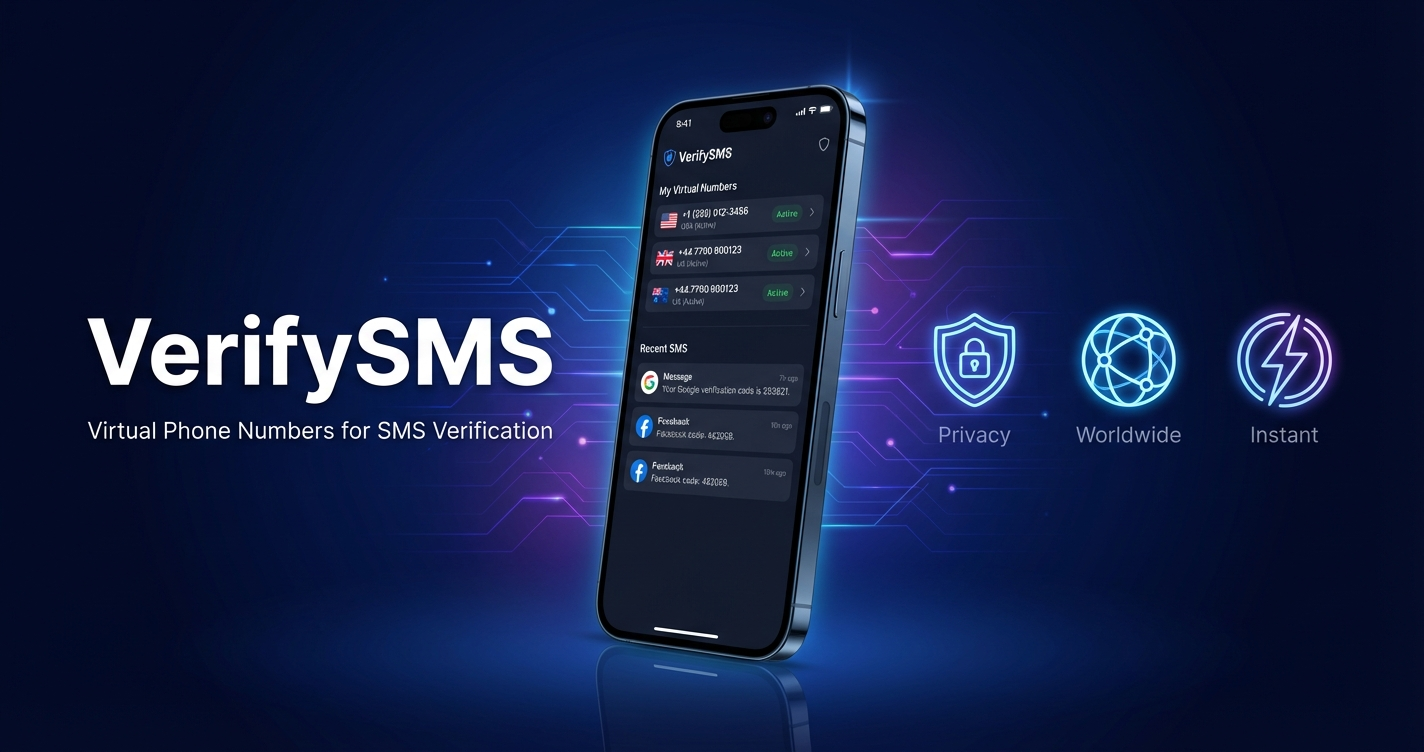
In this comprehensive guide, we explain exactly why OpenAI requires phone verification, break down which types of numbers work (and which do not), walk you through the complete verification process using a virtual number from VerifySMS, and explore every alternative approach available in 2026.
Why OpenAI Requires Phone Verification for ChatGPT
OpenAI did not implement phone verification arbitrarily. The requirement addresses several real challenges that come with operating a powerful AI system that is accessible to the general public.
Preventing Mass Account Creation
ChatGPT's free tier provides access to one of the most capable AI models ever created. Without any identity verification, bad actors could create thousands of accounts to exploit free-tier limits, effectively getting unlimited access without paying. Phone verification ensures that each account corresponds to a unique individual (or at least a unique phone number), making mass exploitation significantly more expensive and difficult.
🔒 Need a virtual number right now?
Instant SMS verification • 150+ countries • from $0.20
📱 Download VerifySMS FreeRate Limiting and Fair Usage
OpenAI enforces rate limits on ChatGPT usage to ensure that their servers can handle the demand and that resources are distributed fairly among users. Phone verification is the backbone of this system. Without it, a single user could circumvent rate limits by creating new accounts whenever they hit a cap. By tying accounts to phone numbers, OpenAI can enforce per-person limits more effectively.
Compliance with AI Safety Regulations
As AI regulation evolves worldwide — the EU AI Act, the US Executive Order on AI, and various national frameworks — platforms offering powerful AI capabilities face increasing pressure to implement identity verification measures. Phone verification is a lightweight form of KYC (Know Your Customer) that helps OpenAI demonstrate to regulators that they have measures in place to track and attribute AI usage.
Reducing Harmful Content Generation
Despite extensive safety training, ChatGPT can be manipulated through jailbreaks and prompt injection to generate harmful content. Phone verification creates accountability: if an account is used to generate content that violates OpenAI's usage policies, the associated phone number provides a means to permanently ban the responsible party, not just the individual account.
Protecting API Access and Billing
The OpenAI API involves financial transactions — users are billed based on usage. Phone verification serves as an anti-fraud measure, helping to prevent unauthorized use of stolen payment credentials and reducing chargebacks that cost OpenAI both money and processing overhead.
How Phone Verification Prevents AI Abuse
Understanding the abuse landscape helps explain why OpenAI takes verification seriously, and why responsible users should not view it as adversarial.
🔒 Need a virtual number right now?
Instant SMS verification • 150+ countries • from $0.20
📱 Download VerifySMS FreeAutomated Content Farms
Content farms use ChatGPT to generate thousands of low-quality articles, social media posts, and marketing materials at scale. These operations create new accounts in bulk to avoid rate limits and detection. Phone verification makes this economically unviable — the cost of acquiring unique phone numbers for thousands of accounts outweighs the value of the generated content.
Phishing and Social Engineering
Attackers use ChatGPT to craft sophisticated phishing emails, fake customer support scripts, and social engineering messages. Phone verification does not prevent this entirely, but it limits the volume a single attacker can produce by constraining them to the number of phone numbers they control.
Academic Dishonesty at Scale
While individual students using ChatGPT for homework is a nuanced issue, organized operations that sell AI-generated essays and assignments to students represent a different scale of problem. Phone verification helps limit the number of accounts these operations can maintain simultaneously.
Credential Stuffing and Account Takeover
Attackers sometimes create ChatGPT accounts using credentials stolen from data breaches of other services. Phone verification adds a layer that stolen email/password combinations alone cannot bypass, protecting both OpenAI and the individuals whose credentials were compromised.
Malware and Exploit Development
While ChatGPT has guardrails against generating malware, determined attackers attempt to circumvent these protections across multiple accounts. Phone verification helps OpenAI track and shut down these accounts more effectively, and the phone number requirement makes it harder for attackers to create fresh accounts after being banned.
🔒 Need a virtual number right now?
Instant SMS verification • 150+ countries • from $0.20
📱 Download VerifySMS FreeWhen Is Phone Verification Required?
ChatGPT's verification requirements have evolved since the service launched. Here is a breakdown of every scenario where you may encounter a phone verification prompt in 2026.
New Account Creation
Every new ChatGPT account requires phone verification during registration. You can sign up using your email address, Google account, Microsoft account, or Apple ID, but all sign-up methods eventually require a phone number before you can start using the service. OpenAI sends a six-digit SMS code that you must enter to complete registration.
ChatGPT Plus Subscription
Upgrading from the free tier to ChatGPT Plus (which provides access to GPT-4o, higher message limits, and priority access during peak times) requires a verified phone number if you have not already provided one. The verification happens before or during the payment process.
ChatGPT Pro and Team Plans
OpenAI's higher-tier plans — ChatGPT Pro for power users and ChatGPT Team for organizations — require phone verification for the account administrator. Team members may also need individual verification depending on the organization's security settings.
OpenAI API Account Creation
Developers who want to use the OpenAI API (for building applications powered by GPT-4, GPT-4o, DALL-E, Whisper, and other models) must verify a phone number when creating their API account. This is separate from a ChatGPT consumer account — even if you already have a verified ChatGPT account, creating an API account may require a different phone number.
Security-Triggered Re-verification
In some cases, OpenAI may ask for phone re-verification if your account shows signs of compromise, if you log in from a highly unusual location, or if your account is flagged by their automated security systems. This is less common but worth being aware of.
Organization and Enterprise Onboarding
Businesses using OpenAI's enterprise features may encounter phone verification as part of the organizational setup and administrator account verification process.
Which Phone Numbers Work for ChatGPT Verification?
Not all phone numbers are accepted by OpenAI's verification system. Understanding which types work and which are rejected saves you time and frustration.
Numbers That Work
- Standard mobile numbers: Personal mobile numbers from any major carrier worldwide are accepted. This is what most users provide.
- Real mobile carrier virtual numbers: Numbers provisioned through actual mobile carriers (not VoIP) but delivered via apps rather than physical SIM cards. VerifySMS provides this type of number, which is why they consistently work with ChatGPT.
- Prepaid SIM numbers: Numbers from prepaid SIM cards are generally accepted, provided they are from recognized carriers.
- eSIM numbers: Numbers activated through eSIM profiles (like those from Airalo, Holafly, or carrier eSIM services) typically work without issues.
Numbers That Usually Do Not Work
- Google Voice numbers: OpenAI has blocked most Google Voice number ranges. Attempts to verify with Google Voice typically result in an error message stating the number cannot be used.
- Skype numbers: Similar to Google Voice, Skype numbers are classified as VoIP and are rejected by OpenAI's verification system.
- TextNow and TextFree numbers: These free VoIP services are widely used for spam and abuse, so OpenAI blocks their number ranges proactively.
- Landline numbers: OpenAI sends verification codes via SMS, which landlines cannot receive. Some services offer voice-call verification as an alternative, but OpenAI currently does not.
- Toll-free numbers: Numbers starting with 800, 888, 877, etc. are not accepted for SMS verification.
- Previously used numbers: A phone number that has already been used to verify another ChatGPT account cannot be reused for a new account, regardless of the number type.
Why VerifySMS Numbers Work
VerifySMS sources numbers from real mobile carrier networks rather than VoIP providers. When OpenAI's system checks the number type (a process called HLR lookup or carrier detection), VerifySMS numbers appear as genuine mobile numbers because that is exactly what they are — they are routed through real mobile carrier infrastructure. This distinction is critical and is the primary reason why VerifySMS works with ChatGPT when free VoIP services do not. For a deeper explanation of how this technology works, read our complete guide to SMS verification services.
Step-by-Step: Verify ChatGPT with a Virtual Number
Here is the complete process for verifying your ChatGPT account using a virtual number from VerifySMS. The entire process takes approximately 90 seconds from start to finish.
Prerequisites
- An iPhone with the VerifySMS app installed
- Credits loaded in your VerifySMS account
- A web browser or the ChatGPT app open to the registration or verification page
- A stable internet connection
Open VerifySMS and Search for ChatGPT / OpenAI
Launch the VerifySMS app on your iPhone. Use the search function to find "ChatGPT" or "OpenAI" in the list of supported platforms. The app will display available countries and the current price for each number. Prices vary by country — numbers from less popular regions are often cheaper.
Select a Country and Get Your Number
Choose the country for your virtual number. Any country that OpenAI serves is a good choice, but numbers from the US, UK, Netherlands, and India tend to have the highest success rates for ChatGPT verification. Tap "Get Number" to rent the virtual number. It will appear on your screen immediately along with a countdown timer.
Start the ChatGPT Sign-Up Process
Go to chat.openai.com or open the ChatGPT app. Click "Sign up" and create your account using your preferred method (email, Google, Microsoft, or Apple). When you reach the phone verification step, you will see a field asking for your phone number with a country code selector.
Enter the Virtual Number on ChatGPT
Select the correct country code that matches your VerifySMS number. Enter the number exactly as it appears in the VerifySMS app (without the country code prefix, since you selected it from the dropdown). Click "Send code."
Retrieve the Verification Code from VerifySMS
Switch back to the VerifySMS app. The six-digit verification code from OpenAI will appear on screen within 5 to 30 seconds. You will also receive a push notification when the code arrives, so you do not need to keep the app open and watch. Tap the code to copy it to your clipboard.
Enter the Code and Complete Verification
Return to the ChatGPT sign-up page. Paste or type the six-digit code into the verification field. Click "Verify." OpenAI will confirm your phone number and you will be directed to complete your profile setup or taken directly to the ChatGPT interface.
Start Using ChatGPT
Your account is now verified and ready to use. You can access ChatGPT's free tier immediately. If you want to upgrade to ChatGPT Plus, you can do so from the account settings without needing to re-verify your phone number.
Verify ChatGPT in Under 2 Minutes
VerifySMS provides real mobile carrier numbers that work with OpenAI's verification. No personal phone number required. Available for 50+ countries.
Download VerifySMSSigning Up for ChatGPT Plus with a Virtual Number
ChatGPT Plus is OpenAI's premium subscription that provides access to the latest models, higher usage limits, and priority access during peak demand. Here is what you need to know about using a virtual number for the Plus subscription.
What ChatGPT Plus Includes in 2026
The ChatGPT Plus subscription (currently $20/month) includes:
- Access to GPT-4o and the latest reasoning models
- Higher message limits compared to the free tier
- Priority access during high-traffic periods
- Access to advanced features like Custom GPTs, Code Interpreter, and web browsing
- Image generation with DALL-E integration
- Voice mode and real-time conversation
- Early access to new features and model improvements
Verification Requirements for Plus
If you already verified your phone number during free account creation, you will not need to verify again when upgrading to Plus. The phone verification is tied to your account, not to your subscription tier. Simply go to Settings, select your plan, enter your payment details, and subscribe.
If you skipped phone verification somehow (this is increasingly rare) or if your account was created before phone verification was mandatory, you may be prompted to verify when attempting to subscribe. In this case, follow the same step-by-step process described in the previous section.
Payment Privacy and Virtual Numbers
While a virtual number handles the phone verification aspect, ChatGPT Plus requires a payment method (credit card, debit card, or in some regions, additional payment options). If you are concerned about payment privacy as well, consider using a virtual credit card service in conjunction with your VerifySMS virtual number. This combination provides comprehensive privacy for your ChatGPT Plus subscription.
Team and Enterprise Plans
ChatGPT Team ($25/user/month billed annually) and ChatGPT Enterprise require the account administrator to have a verified phone number. When setting up a team workspace, the admin verification step uses the same SMS-based process. Each admin needs their own verified number — if you are setting up a team and multiple admins need verification, VerifySMS can provide individual numbers for each one.
OpenAI API Access: Phone Verification for Developers
Developers building applications with the OpenAI API face additional verification considerations beyond the standard ChatGPT consumer experience. Here is a comprehensive breakdown.
API Account vs. ChatGPT Account
OpenAI maintains separate systems for ChatGPT consumer accounts and API developer accounts, although they share the same login credentials. Creating an API account at platform.openai.com may require phone verification even if your ChatGPT account is already verified. In some cases, OpenAI requires a different phone number for the API account than the one used for ChatGPT.
Why API Verification Is Stricter
API access carries greater potential for abuse than the ChatGPT web interface because:
- APIs can be called programmatically at high volume
- API outputs can be integrated into automated systems
- API access includes models not available through the ChatGPT interface
- API usage involves billing and financial transactions
For these reasons, OpenAI's phone verification for API accounts may include additional checks, such as verifying that the phone number has not been recently used for another API account or that the number originates from a supported country.
Developer Account Setup with VerifySMS
The process for verifying an OpenAI API account is identical to the ChatGPT verification described above. The only difference is the context in which the verification prompt appears (during API account setup at platform.openai.com rather than during ChatGPT sign-up). Select "OpenAI" in the VerifySMS app, get your number, and complete the verification.
Handling Multiple API Projects
Developers often need separate OpenAI API accounts for different projects, clients, or organizations. Each account requires its own verified phone number. VerifySMS makes it practical to maintain multiple API accounts by providing fresh numbers for each verification. This is particularly useful for:
- Freelance developers managing API access for multiple clients
- Agencies building AI-powered products for different companies
- Developers who want to keep personal and professional API usage separate
- Testing environments that need isolated API accounts
Privacy Concerns with Giving OpenAI Your Phone Number
Before you decide whether to use your personal number or a virtual number for ChatGPT, it is worth understanding the privacy implications of sharing your phone number with OpenAI.
Data Retention and Usage
OpenAI's privacy policy states that they collect and retain phone numbers as part of account information. This data is used for account verification, security, and communication. While OpenAI states they do not sell personal data, the phone number is stored on their servers and is subject to their data protection practices, which are governed by US law.
Conversation Data Linkage
Every conversation you have with ChatGPT is associated with your account, which is linked to your phone number. If you use ChatGPT for sensitive purposes — drafting confidential business documents, discussing personal matters, working with proprietary code — your phone number becomes an identifier that connects your real identity to all of that conversation history.
Government and Legal Requests
Like all US-based companies, OpenAI is subject to law enforcement requests for user data. In compliance with valid legal processes, OpenAI may be required to provide account information, including phone numbers, to government agencies. If your ChatGPT conversations are sensitive in ways that might attract government interest, having a virtual number provides a degree of separation from your personal identity.
Third-Party Data Sharing
OpenAI works with various service providers for infrastructure, analytics, and business operations. While their privacy policy limits how these providers can use your data, sharing your personal phone number with any large technology company increases the number of databases where that number exists, expanding your attack surface for identity theft, SIM swapping, and social engineering.
The Cross-Referencing Problem
Your personal phone number is likely tied to dozens of accounts: banking, social media, email, government services, and more. Each additional platform where your number appears increases the risk of cross-referencing. Data brokers can compile comprehensive profiles by linking phone numbers across leaked databases. Using a unique virtual number for ChatGPT ensures that even if OpenAI's data is compromised, the leaked phone number cannot be used to identify and access your other accounts.
Alternatives to Phone Verification for ChatGPT
While phone verification is the standard requirement, there are some alternative approaches and workarounds worth knowing about. Not all of these work in every situation, but they represent the full landscape of options.
Sign Up Through Apple
When you create a ChatGPT account using "Sign in with Apple," Apple provides a relay email address that hides your real email. However, OpenAI still requires phone verification regardless of how you create your account. Apple Sign-In solves the email privacy problem but not the phone number privacy problem. You will still need a phone number — which is where VerifySMS comes in.
Using the ChatGPT iOS or Android App
The ChatGPT mobile apps use the same account system as the web version. Whether you sign up through the app or the web, phone verification is required. There is no app-specific bypass. However, signing up through the iOS app and paying for ChatGPT Plus through Apple's in-app purchase system means your payment goes through Apple rather than directly to OpenAI, which provides an additional layer of payment privacy.
Microsoft Copilot as an Alternative
If your primary goal is accessing GPT-4-class capabilities and you want to avoid phone verification entirely, Microsoft Copilot (formerly Bing Chat) uses GPT-4 under the hood and only requires a Microsoft account (no phone verification for basic access). The trade-off is that Copilot has different usage limits, a different interface, and is tightly integrated with Microsoft's ecosystem rather than OpenAI's.
Claude, Gemini, and Other AI Assistants
Other AI assistants have varying verification requirements. Some require phone verification while others only need an email address. However, if you specifically need ChatGPT — for its Custom GPTs, specific model access, plugin ecosystem, or API — these alternatives are not substitutes. They are different products with different capabilities.
Academic and Enterprise Access
Some universities and enterprises have organizational ChatGPT subscriptions that may not require individual phone verification. If you are affiliated with such an organization, check whether they offer ChatGPT access through their institutional subscription. This approach typically requires using your organization email and complying with their usage policies.
The Most Practical Alternative: Virtual Numbers
For the vast majority of users who want to use ChatGPT while maintaining phone privacy, virtual numbers from a service like VerifySMS are the most practical and reliable solution. You get full access to ChatGPT with all its features, maintain your privacy, and the entire process takes under two minutes. Compared to the workarounds above, virtual numbers provide the best balance of convenience, reliability, and privacy protection. Learn more in our guide on using temporary phone numbers for verification.
Skip the Workarounds. Verify ChatGPT the Smart Way.
Get a real mobile number from VerifySMS, verify your ChatGPT account in 90 seconds, and keep your personal number completely private.
Get Started with VerifySMSManaging Multiple ChatGPT Accounts
There are several legitimate reasons why you might need more than one ChatGPT account. Here is how virtual numbers facilitate this and what to keep in mind.
Separating Personal and Professional Use
Many professionals want a clear boundary between personal ChatGPT conversations (brainstorming vacation plans, helping kids with homework, creative writing) and professional use (drafting business documents, analyzing data, working with proprietary information). Having separate accounts ensures that sensitive work conversations are not mixed with personal ones and can be managed under different privacy and data retention settings.
Client Work Isolation
Freelancers and consultants working with multiple clients may need separate ChatGPT accounts to comply with client confidentiality agreements. If you are building a product for Client A that uses ChatGPT, Client A might require that their proprietary information never exists on the same account where you process Client B's data. Separate accounts with separate virtual numbers provide this isolation cleanly.
Testing and Development
Developers building applications that integrate with ChatGPT need test accounts to validate their integrations, test edge cases, and run automated tests without affecting production accounts. Each test account requires its own verified phone number.
Regional Accounts
Users who operate in multiple regions may want accounts associated with different countries for access to region-specific features or pricing. Virtual numbers from VerifySMS are available in 50+ countries, making it straightforward to create accounts associated with any region where ChatGPT is available.
How to Manage Multiple Accounts Efficiently
If you maintain multiple ChatGPT accounts, consider these organizational tips:
- Use different email addresses for each account (consider email aliases or services that generate unique addresses)
- Keep a secure record of which virtual number is associated with which account
- Use different browsers or browser profiles for each account to avoid session conflicts
- Label each account clearly in your password manager with its purpose
- Be aware that OpenAI's terms of service may have limitations on multiple accounts — review the current policy before creating additional accounts
Troubleshooting ChatGPT Verification Problems
If you encounter issues during the ChatGPT verification process, here are solutions to the most common problems.
"This Phone Number Is Already in Use"
This error means the number has been used to verify another ChatGPT account. With VerifySMS, this is rare because numbers are recycled with appropriate cooldown periods. If it happens, simply request a new number in the VerifySMS app. The cost for the unused number is typically refunded or credited.
"This Phone Number Is Not Supported"
OpenAI blocks certain number ranges, primarily VoIP and known virtual number providers. VerifySMS numbers are sourced from real mobile carriers and should not trigger this error. If it occurs, try a number from a different country. Some countries have higher acceptance rates than others.
Verification Code Not Arriving
If the code does not appear in VerifySMS within 60 seconds:
- Verify the number was entered correctly on OpenAI's verification page, including the correct country code
- Check that the VerifySMS number is still active (the timer has not expired)
- Click "Resend code" on OpenAI's page (wait at least 60 seconds between resend attempts)
- If the code still does not arrive, cancel the current number and try a new one from a different country
"Too Many Attempts" Error
If you have tried multiple numbers in quick succession, OpenAI may temporarily block verification attempts from your IP address or browser session. Solutions include:
- Wait 15 to 30 minutes before trying again
- Clear your browser cookies and cache for chat.openai.com
- Try using a different browser
- If using a VPN, try switching to a different server location
Account Locked After Failed Verification
In rare cases, too many failed verification attempts can temporarily lock your account. OpenAI typically unlocks these accounts automatically after 24 hours. If the lock persists, contact OpenAI support through their help center with your email address to request manual review.
Verification Success but Account Still Limited
If your phone verification succeeds but you still cannot access certain features, the limitation may be unrelated to phone verification. Check for:
- Email verification (check your inbox for a confirmation email)
- Age verification (some regions require confirmation that you are over 18)
- Regional restrictions (ChatGPT is not available in all countries)
- Service outages (check status.openai.com for current service status)
The Future of OpenAI Verification Requirements
As AI regulation evolves and OpenAI's products mature, verification requirements are likely to change. Here is what to expect and how to prepare.
Potential Shift to Identity Verification
The EU AI Act and similar regulations may require AI platforms to implement stronger identity verification for users of high-capability AI systems. This could eventually mean government ID verification, biometric checks, or integration with digital identity systems. Phone verification is currently the lightest option, but it may be supplemented (not replaced) by stronger measures.
World ID and Decentralized Identity
Sam Altman's other venture, Worldcoin (now World), has developed World ID — a decentralized identity verification system based on iris scanning. While OpenAI and World are officially separate companies, there has been speculation about potential integration. If World ID is offered as an alternative to phone verification, it would provide privacy-preserving verification without requiring a phone number. However, it would also require biometric enrollment, which carries its own privacy implications.
Behavioral Authentication
Some AI platforms are exploring behavioral authentication — using patterns of interaction (typing speed, mouse movements, usage patterns) to distinguish humans from bots. If OpenAI adopts this approach, it could reduce or eliminate the need for phone verification for returning users who have established a behavioral fingerprint.
Tiered Verification
OpenAI may implement tiered verification where basic access requires only an email, standard access requires phone verification, and advanced access (API, higher limits, sensitive capabilities) requires stronger identity confirmation. This tiered approach would balance accessibility with safety.
What This Means for Virtual Number Users
For the foreseeable future, phone verification remains the primary method for ChatGPT account verification. Virtual numbers from services like VerifySMS will continue to work as long as they use real mobile carrier infrastructure. Even if additional verification layers are added, phone verification is likely to remain as a base requirement. Having a reliable virtual number provider ensures you can meet this requirement without compromising your personal privacy.
Future-Proof Your AI Privacy
Whether OpenAI strengthens verification or keeps it as is, VerifySMS gives you the tools to verify privately. Real mobile numbers from 50+ countries, delivered instantly to your iPhone.
Download VerifySMS TodayConclusion
ChatGPT phone verification is a reality of using one of the most powerful AI tools available in 2026. OpenAI implements this requirement for good reasons — preventing abuse, ensuring fair usage, and meeting regulatory expectations. But these requirements do not mean you have to sacrifice your personal privacy.
Using a virtual number from VerifySMS to verify your ChatGPT account gives you the best of both worlds: full access to ChatGPT's capabilities and complete control over your personal information. The process takes less than two minutes, costs a fraction of a prepaid SIM card, and works reliably because VerifySMS uses real mobile carrier numbers that OpenAI's systems accept without issue.
Whether you are signing up for a free ChatGPT account, upgrading to ChatGPT Plus for GPT-4o access, setting up an OpenAI API account for development, or managing multiple accounts for different purposes, VerifySMS makes the verification process fast, private, and hassle-free.
Stop sharing your personal phone number with every AI platform that asks for it. Start taking control of your digital privacy today. Download VerifySMS from the App Store and verify ChatGPT on your terms.
For more guides on private verification, check out these related articles:
- Complete Guide to SMS Verification Services
- LinkedIn Phone Verification with a Virtual Number
- How to Verify WhatsApp Without Your Personal Phone
- Using Temporary Phone Numbers for Verification
Ready to protect your privacy?
Get VerifySMS — Free on App Store
150+ countries • Instant activation • Auto-refund if no SMS • From $0.20
Download Free App★★★★★ 4.8 • iOS 16+ • Free